
Video
If you’re producing video, either for your business or for a personal YouTube channel, you quickly learn how much work goes into creating quality content. Scripting, production, and delivery are all skills you need to develop along the way. But one of the biggest time sinks is editing.
It’s an underappreciated part of the process — when it’s done well, it should be the last thing a viewer ever notices. But that seamless impact comes at a high price in terms of time and skill.
It’s why you might be considering hiring a video editor instead of handling it yourself. But how do you go about hiring a video editor, and is it actually worthwhile compared to doing it yourself?
Let’s take a look at all the factors that go into video editing and the associated costs, so you can decide how you want to handle editing duties.
What Does Going DIY Cost You?
At first, you might wonder why you’d bother to hire a video editor in the first place. After all, while editing software can seem complex, anyone can figure out how to piece together a basic video with a little effort.
Why pay somebody to do it for you? While the DIY route may seem like the cheapest option on paper, there are bigger costs than you might think.
It’s All Tech and Time
First, there’s the tech you need to get started. While your computer might be powerful enough to handle video editing, that’s not always a given. If you end up needing upgrades, it won’t take long for those costs to eat into your savings.
Then There’s the Cost of Editing Software
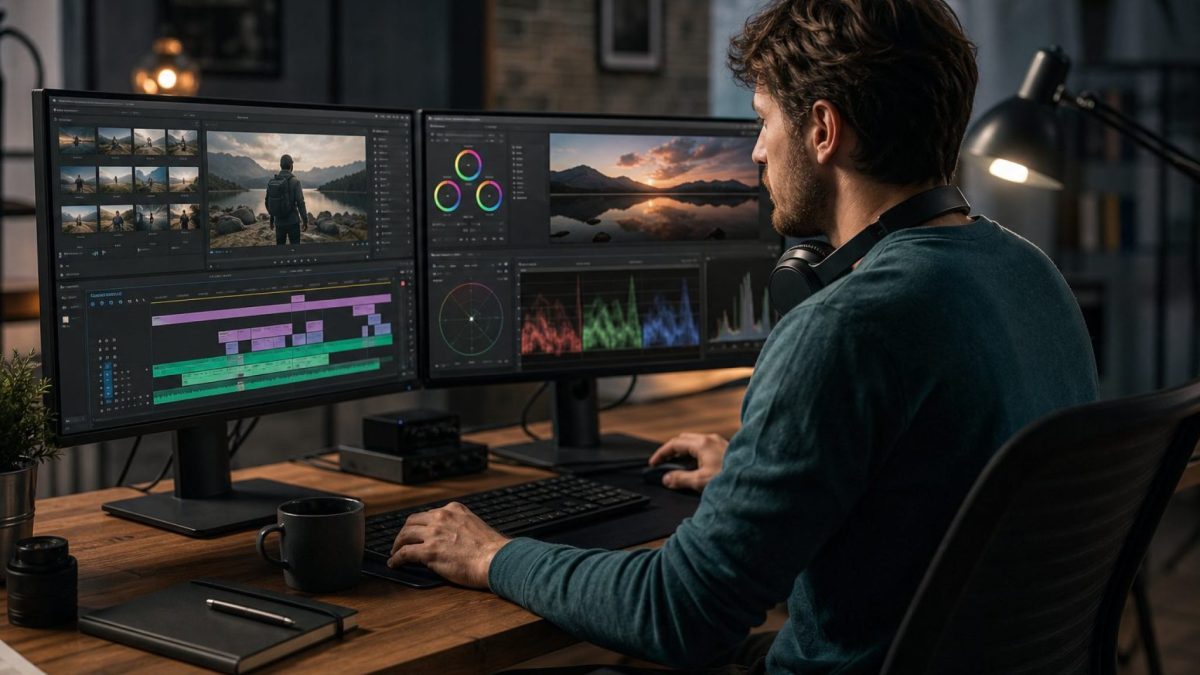
We’re past the days when you could get away with slapping a video together in iMovie. Better to save that for posting vacation videos to social media. When it comes to professional editing software, the industry standards are Final Cut Pro and Adobe Premiere.
Final Cut Pro is an Apple product, so you’ll need Apple machines to run it. So unless you’re already using Apple products, you’ll need to factor a hardware upgrade into your calculations. On the upside, you can buy the software outright for a one-time cost of $299.99, an advantage over its competitor.
Adobe Premiere Pro Is the Other Standard Option
Like other Adobe products, it isn’t locked to any particular operating system, so you can run it on most machines. A big drawback is that it’s subscription-only, and a monthly subscription to Premiere and related programs like After Effects and Audition can quickly add up.
In the long run, you could end up paying several times what you’d pay for Final Cut Pro. And that’s before you factor in how much of your time it would take to edit each video by hand — time that could be better spent scripting and recording new content.
Why You’d Hire a Video Editor Instead
Bringing on a professional video editor minimizes or even eliminates those costs. For starters, they come equipped with their own workstations and software, so you don’t need to factor that into your calculations.
But the biggest factor here is time. Every aspect of video production takes longer than the casual observer would think, and editing is the most time-consuming of all of them. By outsourcing that work to a professional,
you’re free to focus on other aspects like producing and promoting your content. If you have the budget, you can even retain multiple editors to put out video content daily — something that can help you get noticed by YouTube and social media algorithms.
Types of Video Editors
There’s more than one way to hire a video editor, and different options may be better suited to your working style. Here are three of the more common options.
Hiring freelance editors: if you need to hire a video editor on short notice, going with freelancers is the best way to do this — whether you’re facing an unexpected deadline, taking on more work than you planned,
or you’ve lost the team member who would normally handle editing duties, freelancers are one of the best ways to get you out of a bind.
Not only is it your best option in a pinch, hiring freelancers is a fast and easy way to speed up production, freeing you and other members of your team to handle other duties.
And once you find a good one, they’ll be a huge asset you’ll want to keep on all of your future projects. And since they’re not contracted employees, you have more flexibility than you would with a regular staff member.
Not to mention you don’t have to account for vacation pay, benefits, and the like. And since most freelancers are professionals in their field who rely on their reputations,
you can often find industry veterans who’ve been plying their trade for years. This gives you access to professionals who might otherwise be out of your budget, and the quality of content you produce can end up well above your investment.
Outsourcing to a Dedicated Editing Company
If you want to be as hands-off as possible, sending your footage to a professional editing house is always an option. These companies keep a pool of qualified professionals on staff.
So you rarely have to worry about quality or timing being an issue. However, you might not always get the same level of personalization you’d get from working with an individual editor.
Retaining a Full-Time Editor
This option has you bringing on a full-time hire to be your in-house editor.