
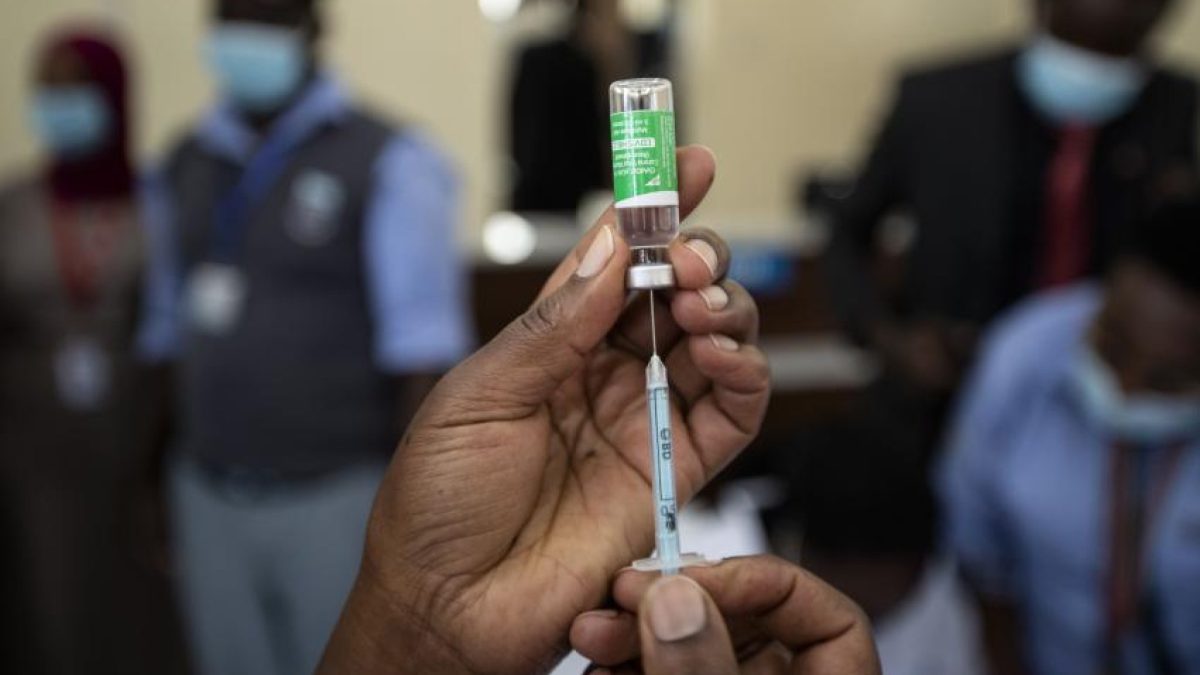
While most healthcare workers in the wealthy world were vaccinated early in 2021, just a quarter of Africa’s health workers had received their COVID-19 shots by the end of last year.
NEW YORK, Feb 16, 2022 (IPS) – Efforts to fight the vast global inequity in access to COVID-19 vaccines just got a boost. A Cape Town firm says it successfully made a vaccine that resembles Moderna’s mRNA shot — with no assistance from Moderna. This copycat vaccine will still need to go through clinical trials, but the effort could produce Africa’s first COVID-19 vaccine.
So far, African factories have largely been left out of the effort to manufacture COVID-19 vaccines, mostly limited to filling and labeling containers with the drug substance made elsewhere.
As a result, when vaccines were in short supply globally, Africans were left to wait. When shipments did arrive, they often overburdened public health systems with very short notice, and sometimes close to their expiration date.
Strive Masiyiwa, the African Union Special Envoy to the African Vaccine Acquisition Task Team and a prominent entrepreneur, described the experience of trying to buy vaccines on the continent’s behalf: “I met all the manufacturers in December (2020), and said, we would love to purchase some vaccines.
We had money, we agreed to pay upfront in cash. We were not asking for donations, and they said all capacity for 2021 had already been sold … the people who got the vaccines knew there would be nothing left for us.”
Today, more than 10 billion doses of COVID-19 vaccines have been administered worldwide, including as many as four doses each in some places. Yet in the world’s least developed nations, just 10 percent of people have accessed even a single dose.
While most healthcare workers in the wealthy world were vaccinated early in 2021, a study by the World Health Organization found that just a quarter of Africa’s health workers had received their COVID-19 shots by the end of last year. In the Democratic Republic of the Congo and Chad, even today, less than 1 percent of the population is vaccinated.
The South African company behind the copycat vaccine, Afrigen Biologics and Vaccines, hopes to shift these dynamics by building better production capacity on the continent. If all goes to plan, Afrigen will begin its clinical trials in 2023.
That’s still a long way off. It’s worth noting that experts agree it didn’t have to be this way. If Afrigen had been able to obtain a technology transfer, it says, it could have produced a vaccine ready for trials months ago.
If, for example, the U.S. and German governments had used their influence to press Moderna, Pfizer, and BioNTech to share their COVID-19 vaccine formulas and know-how, Afrigen, and many other potential manufacturers in Africa, Latin America, and Asia would already have been able to join the global effort to make enough doses for everyone, everywhere.
But when Human Rights Watch asked Moderna about its approach to technology transfers more broadly, representatives replied that the company was “not aware of any idle mRNA manufacturing capacity,” and that transferring their technology “requires significant time from a limited pool of experienced staff with the requisite expertise.”
Instead, Moderna has pledged “investment in a state-of-the-art mRNA manufacturing facility in Africa” of its own, which it claims will eventually produce up to 500 million doses per year, estimating three years to get a plant up and running.
Meanwhile, Afrigen hopes to eventually transfer the skills and technology for its vaccine to factories across Africa, and even train companies in Argentina and Brazil as well. Experts have already identified more than 100 facilities that could be making mRNA vaccines right now. Eight of them are on the African continent.
Moderna has yet to comment on Afrigen’s breakthrough. The WHO technology transfer hub coordinating the effort does not plan to “infringe” on patents. For its part, Afrigen’s managing director has said, “this is not Moderna’s vaccine, it is the Afrigen mRNA hub vaccine.”
They also point to a commitment from Moderna that it will not enforce its COVID-19-related patents against those making vaccines intended to fight the pandemic.
Yet the MSF Access Campaign has raised concerns that Moderna reserves the right to decide when it believes the pandemic is over and its patent enforcement will resume.
Afrigen’s breakthrough comes amid renewed attention to India and South Africa’s push to waive certain intellectual property rights until everyone, everywhere has access to vaccines. The African Union has thrown its weight behind the proposal, and the Biden administration backed the idea, at least for vaccines, in 2021.
Talks remain stalled at the World Trade Organization due to short-sighted opposition from the European Union. If a waiver is adopted this month, as some diplomats hope, it could help protect Afrigen’s vaccine, and make it easier to produce more of the COVID-19 treatments, tests, and vaccines that we all need.
Afrigen’s success spotlights a failure of international solidarity. Africa’s scientists shouldn’t have to go it alone. The companies behind the name-brand COVID-19 vaccines — Pfizer, Moderna, and BioNTech — should share their technology far more widely, or governments will need to make it happen.